1. Basic Overview
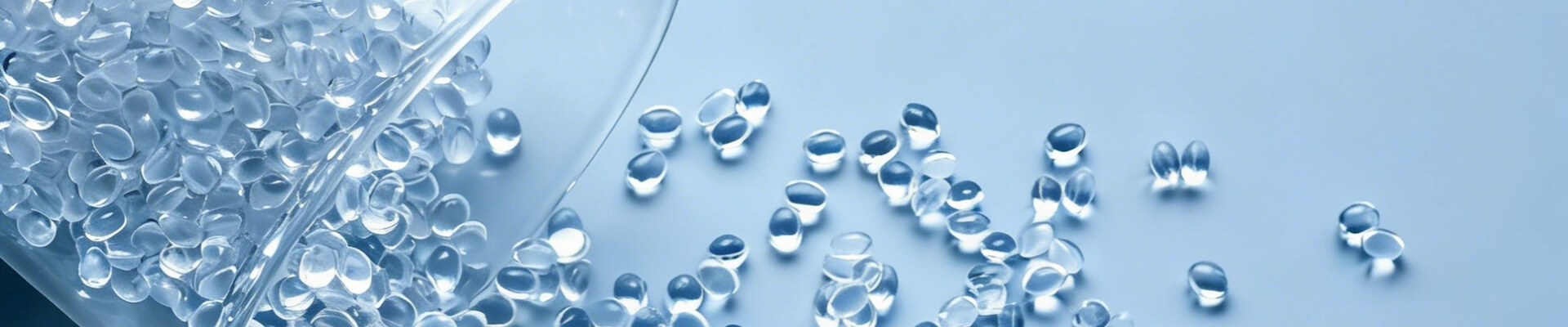
EVOH (Ethylene Vinyl Alcohol Copolymer) is a crystalline polymer formed by the copolymerization of ethylene and vinyl alcohol. It is recognized as one of the world's three major high-barrier resins (alongside PVDC and Polyamide). It is produced through the saponification or partial saponification of ethylene-vinyl acetate copolymer (EVA) and can be considered a modified form of polyvinyl alcohol. Its ethylene content typically ranges from 20% to 45% molar content, with vinyl alcohol content between 60% and 80%.
Key Molecular Characteristic
EVOH molecular chains contain hydroxyl groups (-OH) that form a dense structure through hydrogen bonding.
● Ethylene content typically ranges from 20% to 45% mol%.
● As ethylene content increases, gas barrier performance decreases, but moisture resistance and processability improve.
2. Key Technical Properties & Advantages
|
Property Category |
Technical Description |
Specific Advantages |
|
Excellent Gas Barrier |
Gas barrier is >10x that of PVDC, ~100x higher than PA, and ~10,000x higher than PP/PE |
Effectively prevents oxygen ingress, maintains food flavor and quality; effectively retains CO₂ or N₂ in gas-flushed packaging |
|
Oil/Solvent Resistance |
Extremely high resistance to most organic solvents and oils |
Zero weight gain after 1-year immersion in cyclohexane, xylene, petroleum ether, benzene, and acetone at 68°F |
|
Mechanical Properties |
High mechanical strength, elasticity, and surface hardness |
Typical tensile strength at break: approx. 44-49 MPa |
|
Optical Properties |
High gloss, low haze, high transparency |
Films exhibit excellent optical clarity |
|
Thermal Stability |
Highest thermal stability among all commercial high-barrier resins |
Processing waste is recyclable; regrind can contain >20% EVOH |
|
Environmental Friendliness |
No plasticizers; combustion produces no dioxins |
Complies with FDA and EU food contact standards; safe for direct food/ pharmaceutical contact |
3. Typical Property Ranges
|
Property |
Typical Value Range |
Notes |
|
Density |
1.13 – 1.21 g/cm³ |
Typically 1.15-1.19 g/cm³ |
|
Melt Index |
0.7 – 20 g/10min |
At 190°C/2.16kg |
|
Ethylene Content |
20 – 45 mol% |
Common range: 38-44%; 32% is typical balance point |
|
Melting Point |
158 – 190°C |
Typically 160-168°C |
|
Tensile Strength |
44 – 49 MPa |
Film grade |
|
Elongation at Break |
320 – 340% |
Film grade |
|
Oxygen Transmission Rate |
0.6 cm³/(m²·24h·0.1MPa) |
Measured in multilayer structures |
|
Water Vapor Transmission Rate |
2.0 g/(m²·24h) |
Measured in multilayer structures |
4. Processing Guidelines
4.1 Basic Processing Methods
There are three primary methods for incorporating EVOH as a barrier layer in multilayer structures:
Coextrusion: Combining EVOH with polyolefins or polyamide to form multilayer structures
Film Lamination: Laminating EVOH film to other substrates or coating with other materials
Direct Coating: Using EVOH resin as a coating for various substrates or single-layer containers
4.2 EVOH-Specific Extrusion Screw Design Considerations
EVOH is a semi-crystalline thermoplastic with high melt viscosity and a narrow melting range. Special attention is required during processing:
|
Design Parameter |
Recommended Range |
Notes |
|
Screw Diameter |
Smaller diameter preferred for given output |
Reduces heat exposure time, increases material flow rate, enhances self-cleaning |
|
L/D Ratio |
24-30:1, commonly 24-26:1 |
Too short risks poor plasticization and air entrapment |
|
Compression Ratio |
3-4:1, commonly 3:1 |
|
|
Feed Section Length |
8-9D |
Adjust based on ethylene content |
|
Compression Section Length |
6-10D |
|
|
Metering Section Length |
8-13D |
|
4.3 Processing Precautions
● To prevent "gels" and carbonization, screws should feature full-flight designs and be chrome-plated
● EVOH is shear-sensitive; appropriately increasing screw speed helps reduce viscosity for better matching with other resins
● Processing temperatures should be strictly controlled to avoid melt stagnation
5. Detailed Applications by Industry
|
Industry Sector |
Primary Applications |
Key Properties Utilized |
|
Food Packaging |
• Aseptic Packaging: Liquid food packaging board |
Oxygen barrier, aroma retention, extended shelf life, high-temperature resistance |
|
Non-Food Packaging |
• Household Chemicals: Cosmetics, toothpaste |
Organic solvent resistance, leak prevention, safety, non-toxicity |
|
Automotive Industry |
• Multilayer Plastic Fuel Tanks: 6-layer structures, EVOH ~3% |
Fuel permeation resistance, lightweighting, design flexibility |
|
Barrier Pipes/Tubing |
• Underfloor Heating Oxygen Barrier Layers: Prevents metal corrosion |
Oxygen barrier, weather resistance |
|
Other Sectors |
• Agriculture: Soil fumigation films |
Versatility, high performance |
6. Recent Technological Developments & Trends
6.1 Humidity Resistance Improvements
Mitsubishi Chemical developed Soarnol™ RB7205B; Kuraray developed KURARISTER™ series targeting retort film applications. These effectively address delamination and whitening during retorting, with barrier properties recovering within 3-7 days.
6.2 Bio-based EVOH
Mitsubishi Chemical introduced Soarnol™ PB7104B, containing >25% bio-based content.
6.3 Recyclability Solutions
Mitsubishi Chemical developed Soaresin™ recycling aid, improving compatibility between polyolefins and EVOH to facilitate packaging material recycling.
Kuraray developed EVAL™ XEP series, designed for recyclability.
6.4 Specialized Grades
Development of grades with ethylene contents of 27%, 29%, 44% etc., tailored for specific applications.
Kuraray offers 7 EVAL™ series (M, L, F, etc.) covering automotive, thermoforming, pipe, and film applications.
7. Important Considerations
7.1 Humidity Sensitivity
EVOH is hydrophilic and hygroscopic. When it absorbs moisture, its gas barrier performance is affected. Therefore, EVOH is typically combined with high-moisture-barrier resins like polyolefins (PE/PP), sandwiching the EVOH layer in the middle of the multilayer structure.
7.2 Processing Thermal Stability
Although EVOH has high thermal stability, melt stagnation during processing must be avoided. Stagnation can lead to molecular dehydration, double bond formation, crosslinking, resulting in "gels" or even carbonization.
7.3 Compatibility with Other Resins
Incompatible with polyolefins (PE, PP): Requires a tie layer (adhesive resin) for bonding.
Good compatibility with PA6: Can be used to create blends.
Limited compatibility with PBAT: Mechanical properties may degrade at high EVOH loading.

Other Application
View More

Technical Overview of EAA(Ethylene Acrylic Acid Copoly)

EVA (Ethylene-Vinyl Acetate) Particles Applications Overview